
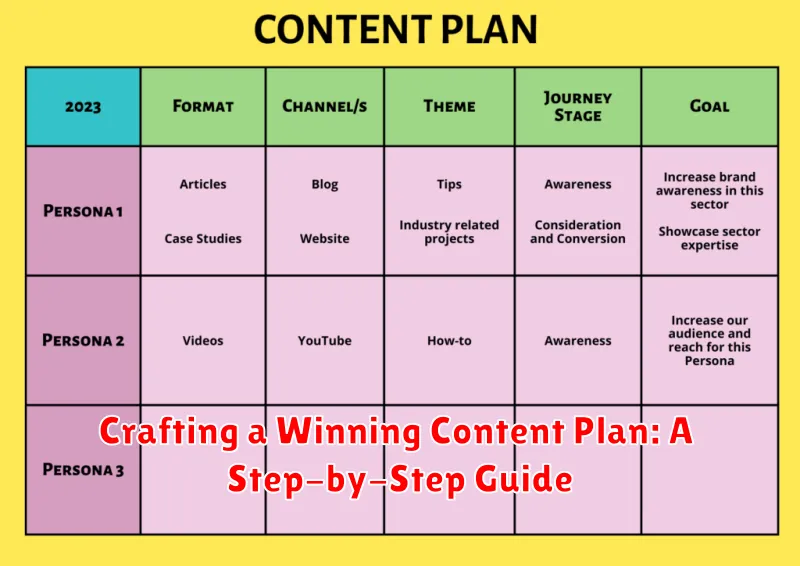
In today’s digital landscape, a winning content plan is crucial for any business or individual seeking to establish a strong online presence. Whether you’re aiming to boost brand awareness, drive traffic to your website, generate leads, or establish thought leadership, a well-crafted content plan serves as your roadmap to success. This step-by-step guide will equip you with the knowledge and tools necessary to craft a content plan that delivers measurable results, outlining key strategies for content creation, distribution, and performance analysis. By understanding the core components of a successful content plan, you can effectively engage your target audience and achieve your desired outcomes.
Developing a winning content plan involves more than simply creating and publishing content. It requires a strategic approach that considers your target audience, your business objectives, and the competitive landscape. This comprehensive guide will delve into the essential elements of a content plan, from defining your target audience and setting clear goals to choosing the right content formats and establishing a consistent publishing schedule. Following this step-by-step guide will empower you to create a content plan that not only attracts and engages your audience but also drives meaningful results for your business or personal brand.
Understanding the Importance of a Content Plan
In the digital age, content is king. But simply creating content isn’t enough. A well-defined content plan is crucial for achieving your marketing and business objectives. It provides a strategic roadmap, ensuring your content efforts are focused, consistent, and effective.
Without a plan, content creation becomes haphazard, lacking direction and measurable results. A content plan helps streamline your efforts, ensuring every piece of content contributes to a larger goal. It helps you avoid wasting time and resources on content that doesn’t resonate with your target audience or support your overall strategy.
A strong content plan enables you to track progress, measure success, and make data-driven adjustments. By outlining key performance indicators (KPIs), you can assess the effectiveness of your content and refine your approach over time.
Defining Your Target Audience and Goals
A crucial step in content planning is defining your target audience and establishing clear goals. Understanding your audience is fundamental to creating content that resonates with them. Ask yourself: Who are you trying to reach? What are their demographics, interests, and online behavior?
Defining your target audience involves creating buyer personas. These are semi-fictional representations of your ideal customers, based on research and data. A well-defined persona includes details like age, occupation, pain points, and motivations.
Equally important is outlining your content goals. What do you hope to achieve with your content? Common goals include increasing brand awareness, driving website traffic, generating leads, and boosting sales. Measurable goals provide a benchmark for evaluating the success of your content strategy.
Conducting Keyword Research and Topic Ideation
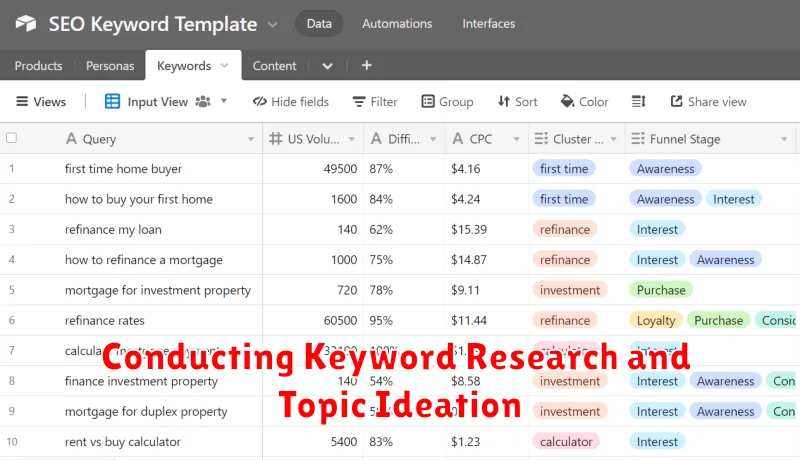
Keyword research forms the backbone of effective content strategy. It involves identifying the terms and phrases your target audience uses when searching online. Understanding these keywords allows you to tailor your content to match their search intent, increasing visibility and organic traffic.
Begin by brainstorming relevant topics related to your business and industry. Then, utilize keyword research tools to discover related keywords, focusing on search volume, competition, and relevance. Prioritize high-volume, low-competition keywords for optimal results.
Once you have a solid list of keywords, begin generating topic ideas. Consider various angles and perspectives to create engaging and informative content. Think about what questions your audience might be asking and aim to provide valuable answers. This process will help you develop a robust content library that attracts and resonates with your target audience.
Creating a Content Calendar and Schedule
A content calendar provides a structured overview of your planned content pieces, their publishing dates, and distribution channels. It acts as a roadmap, ensuring consistent output and preventing last-minute scrambles for content. This organized approach is crucial for maximizing your content’s impact.
Start by choosing a suitable format. A spreadsheet, dedicated content calendar software, or even a simple shared document can work effectively. Populate your calendar with planned content topics, assigning specific publishing dates. Consider factors like seasonality, upcoming events, and your target audience’s preferences when scheduling.
Establish a realistic publishing schedule that you can maintain consistently. Whether it’s daily, weekly, or monthly, consistency is key to keeping your audience engaged and improving your search engine rankings. Remember to incorporate buffer time for unexpected delays or revisions.
Track your content’s performance after publishing. Analyze metrics like website traffic, social media engagement, and lead generation to assess its effectiveness. This data-driven approach informs future content creation and scheduling decisions, ensuring your content strategy remains aligned with your goals.
Choosing the Right Content Formats for Your Audience
Selecting the appropriate content formats is crucial for effectively reaching and engaging your target audience. Different formats cater to different preferences and consumption habits. Consider your audience’s demographics, online behavior, and the platforms they frequent when making your choices.
Blog posts are excellent for delivering in-depth information and establishing thought leadership. Infographics are ideal for presenting data and complex concepts visually. Videos can be highly engaging, especially for tutorials or product demonstrations. Short-form content like social media updates and stories are perfect for capturing attention quickly and driving traffic to longer-form content.
Consider using a mix of formats to cater to diverse preferences. Experiment to see what resonates best with your specific audience and refine your strategy accordingly. Think about what format best suits the information you are trying to convey. For example, a how-to guide might be best presented as a video, while a data analysis could be more effective as an infographic.
Promoting Your Content and Measuring Results
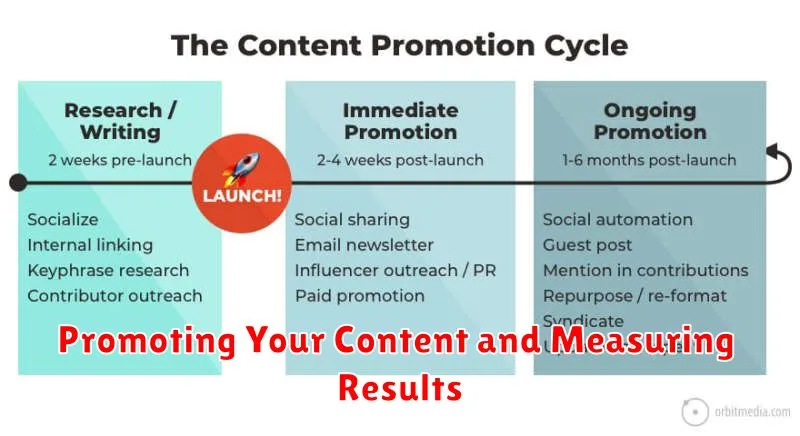
Content promotion is crucial for reaching your target audience. A multi-channel approach often yields the best results. Consider leveraging social media platforms, email marketing, and paid advertising to amplify your content’s reach.
Measuring results is essential to understanding what’s working and what needs adjustment. Key metrics include website traffic, engagement (likes, shares, comments), and conversions (leads, sales). Use analytics tools to track these metrics and gain insights into audience behavior.
Establish clear key performance indicators (KPIs) aligned with your content goals. Regularly review your data and make necessary adjustments to your promotion strategy based on performance.
Staying Consistent and Adapting Your Strategy
Consistency is key to a successful content plan. Regular posting establishes your presence and builds audience anticipation. Create a realistic content calendar and stick to it. This could involve daily, weekly, or monthly posting, depending on your resources and target audience.
However, consistency doesn’t mean rigidity. Monitor your content performance. Analyze metrics like engagement, reach, and website traffic. Identify what resonates with your audience and what falls flat.
Based on your analysis, be prepared to adapt your strategy. This might involve tweaking your content format, adjusting your posting schedule, or exploring new platforms. The digital landscape is constantly evolving, so your content plan should too.
Regular reviews of your content plan are essential. Schedule dedicated time, perhaps monthly or quarterly, to assess your progress and make necessary adjustments. This ensures your content remains relevant, engaging, and effective in achieving your goals.
Tools and Resources for Content Planning
Effective content planning often necessitates leveraging various tools and resources to streamline the process and maximize impact. Here are some key categories and examples:
Content Calendar Software:
These tools provide a centralized platform to schedule and organize your content across different platforms. Examples: Google Calendar, Trello, Asana, CoSchedule.
Keyword Research Tools:
Understanding what your audience searches for is crucial. Keyword research tools help identify relevant keywords to target. Examples: SEMrush, Ahrefs, Google Keyword Planner.
Social Media Management Platforms:
Streamline your social media posting and analyze performance with dedicated tools. Examples: Buffer, Hootsuite, SproutSocial.
Analytics Platforms:
Track your content performance to understand what’s working and what needs adjustment. Examples: Google Analytics, Facebook Insights.
