
In the ever-evolving digital landscape, Twitter remains a powerful platform for communication and information dissemination. Mastering the art of crafting viral tweets can significantly amplify your message, expand your reach, and cultivate a strong online presence. This article delves into the essential strategies and proven techniques to help you create engaging content that resonates with a wider audience and has the potential to go viral. From understanding the nuances of Twitter algorithms to leveraging effective hashtags and captivating visuals, we’ll explore the key elements that contribute to a tweet’s virality.
Whether you are a seasoned social media marketer, a burgeoning entrepreneur, or simply an individual seeking to maximize your Twitter impact, understanding how to create viral tweets is crucial. This comprehensive guide will equip you with the knowledge and actionable steps necessary to elevate your Twitter game. We will explore a range of strategies, including crafting compelling copy, incorporating relevant hashtags, understanding the importance of timing, and engaging with your audience effectively. By implementing these techniques, you can significantly increase your chances of crafting tweets that capture attention, generate buzz, and ultimately, go viral.
Understanding the Twitter Algorithm
To craft viral tweets, it’s crucial to understand how the Twitter algorithm works. This algorithm determines which tweets are shown to users and how prominently they are displayed. Visibility is key for virality, and understanding the factors that influence it is paramount.
The algorithm prioritizes engagement. This includes retweets, likes, replies, and quote tweets. Tweets with high engagement signal to Twitter that the content is valuable and interesting to users, leading to increased reach.
Recency also plays a role. More recent tweets are generally favored over older ones. This encourages real-time interaction and keeps the platform’s content fresh.
Additionally, the algorithm considers the relevance of tweets to individual users. This is based on factors such as who they follow, what they tweet about, and which tweets they engage with.
Identifying Your Target Audience
Before crafting a tweet destined for virality, understanding your target audience is crucial. Knowing who you’re trying to reach allows you to tailor your content for maximum impact. A tweet that resonates with one group might fall flat with another.
Consider the demographics and interests of your ideal audience. What are their passions? What problems do they face? What kind of content do they typically engage with on Twitter? Answering these questions will guide your content creation strategy.
Analyze your current followers. Use Twitter analytics to understand their interests and demographics. This data provides valuable insights into who is already receptive to your message. Look for patterns in their engagement. What type of content do they retweet or reply to most often?
Research your competitors. Identify their target audience and analyze their successful tweets. This can offer inspiration and help you understand what kind of content resonates with your shared target demographic.
Creating Engaging Content for Tweets
Crafting engaging content is crucial for capturing attention on Twitter. Tweets that resonate with users are more likely to be shared, liked, and retweeted, thus increasing their visibility and potential for virality.
One effective technique is incorporating visual elements. While images and videos aren’t discussed in this section, consider how they could enhance the text you write. Think about how your words can paint a picture or tell a story.
Ask questions to stimulate conversation. Posing thoughtful questions encourages user interaction and fosters a sense of community around your tweet. A simple poll can also boost engagement. Consider open-ended questions that require more than a yes/no answer.
Keep it concise. Brevity is key on Twitter. While you have a character limit, aiming for shorter tweets can be more impactful. Get straight to the point and deliver your message clearly and succinctly.
Using Relevant Hashtags and Keywords
Hashtags and keywords are essential for increasing the discoverability of your tweets. They categorize your content and make it easier for users interested in specific topics to find it. Effective hashtag usage can significantly expand your reach beyond your current followers.
Research relevant hashtags. Don’t just use popular hashtags indiscriminately. Instead, focus on hashtags that are genuinely related to your tweet’s content. Tools like Twitter’s own search function can help you identify trending and relevant hashtags.
Use keywords strategically. Incorporate relevant keywords within your tweet’s body to improve its visibility in search results. Think about the terms people might use when searching for information related to your tweet.
Don’t overdo it. While using relevant hashtags and keywords is crucial, avoid stuffing your tweets with too many. Focus on quality over quantity. A few well-chosen hashtags and keywords are more effective than a long, cluttered list.
Leveraging Trending Topics
Trending topics offer a powerful avenue for increasing your tweet’s visibility. By strategically incorporating relevant trending topics, you can tap into ongoing conversations and expose your content to a wider audience.
Identifying relevant trends is crucial. Don’t just jump on any trending hashtag. Ensure the trend aligns with your content and target audience. Using irrelevant trends can appear spammy and damage your credibility.
Adding your unique perspective to a trending topic is key to standing out. Simply echoing popular sentiment is unlikely to gain traction. Offer insightful commentary, a humorous take, or a fresh angle to capture attention.
Timing is everything. Engage with trending topics while they’re active. A late entry will likely be buried under the sheer volume of tweets. Monitor trends in real-time and respond quickly when an opportunity arises.
The Power of Visuals: Images, GIFs, and Videos
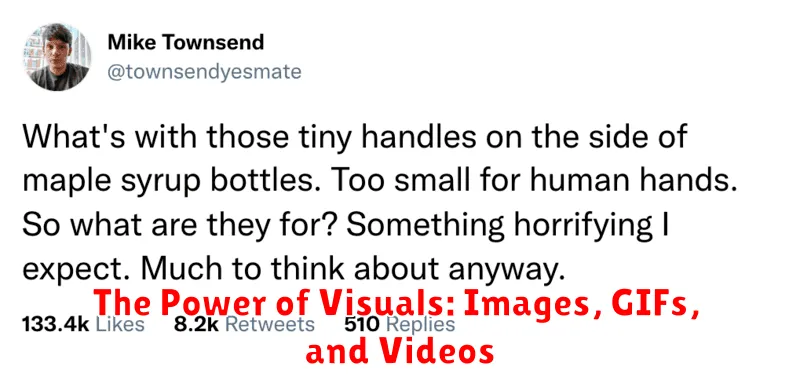
In the fast-paced world of Twitter, visuals are crucial for grabbing attention. Tweets with visual content receive significantly more engagement than text-only tweets. They offer a quick, digestible way for users to process information and connect with your message.
Images provide a powerful way to illustrate your point, showcase a product, or share a memorable moment. High-quality, relevant images can instantly make your tweet more appealing and encourage users to stop scrolling.
GIFs add a touch of dynamism and humor. A well-chosen GIF can amplify your message’s emotional impact and make it more memorable. They are excellent for conveying reactions, highlighting key moments, or simply adding a bit of levity.
Videos provide an even more immersive experience. Short, engaging videos can capture attention and convey complex information effectively. Consider using videos to tell stories, offer tutorials, or provide behind-the-scenes glimpses.
Selecting the right visual is key. Ensure your visuals are high-quality, relevant to your tweet’s content, and optimized for the Twitter platform. A blurry image or a lengthy video can deter users rather than engage them.
Strategies for Increasing Engagement: Asking Questions, Running Polls, and Hosting Contests
Boosting engagement is crucial for virality. Actively involving your audience transforms passive viewers into active participants. Three effective strategies for driving engagement include asking questions, running polls, and hosting contests.
Asking questions encourages direct interaction. Pose thought-provoking questions relevant to your audience’s interests. Open-ended questions tend to generate more discussion than simple yes/no questions. For example, instead of asking “Do you like coffee?”, try “What’s your favorite way to brew coffee?”.
Running polls provides a simple way for followers to express their opinions. Twitter’s built-in poll feature makes creating and participating in polls seamless. Keep polls concise and focused on a single topic. For instance, a poll asking “Which is better: cats or dogs?” is more effective than a multi-faceted poll on various pets.
Hosting contests can significantly increase engagement and expand your reach. Clearly define the rules and prizes to ensure transparency. Encourage retweets and follows as part of the entry process to maximize visibility. Offering a desirable prize relevant to your audience will incentivize participation.
Best Practices for Timing Your Tweets
Timing is a crucial factor in maximizing your tweet’s reach. Identifying the optimal times to post can significantly increase visibility and engagement.
Consider your target audience. When are they most active online? Tools like Twitter Analytics can provide insights into your followers’ online behavior. Experiment with posting at different times and days to determine peak engagement periods for your specific audience.
Consistency is also important. Establish a regular posting schedule to maintain audience engagement. However, avoid overwhelming your followers with excessive tweets in a short timeframe.
Be mindful of time zones if your audience is geographically diverse. Scheduling tools can be beneficial for automating tweets across different time zones.
Analyzing Your Tweet Performance and Making Adjustments
Analyzing your tweet performance is crucial for understanding what resonates with your audience and what falls flat. This data-driven approach allows you to refine your tweeting strategy for better engagement and potential virality.
Start by reviewing Twitter Analytics. This built-in tool provides valuable metrics such as impressions, retweets, likes, and replies. Pay close attention to which tweets performed significantly better than others. Identify common elements in these high-performing tweets, such as topics, hashtags, or the time of day they were posted.
Consider using third-party analytics tools for a more in-depth analysis. These tools often offer advanced features for tracking hashtag performance, identifying influencers interacting with your content, and measuring overall audience sentiment.
Based on your analysis, adjust your strategy accordingly. If certain types of content perform well, create more similar content. Experiment with different posting times to optimize reach. Don’t be afraid to try new things and continue analyzing the results. Consistent analysis and adjustment are key to improving your tweet performance and increasing the chances of going viral.
Examples of Viral Tweets and What Made Them Successful
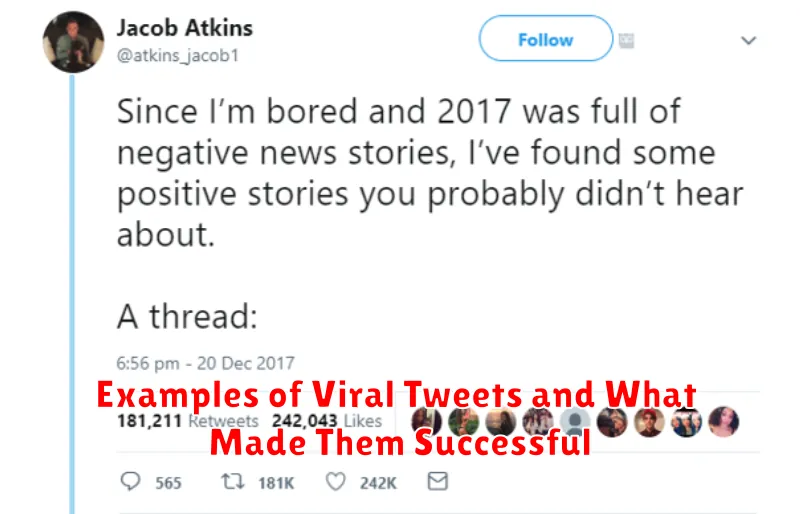
Analyzing successful viral tweets can offer valuable insights into what resonates with audiences. While virality is often unpredictable, certain elements frequently contribute to a tweet’s widespread success. Here are a few generalized examples and their potential success factors:
Example 1: The Humorous Observation
A tweet featuring a witty observation about everyday life, presented in a relatable way. Humor is a powerful tool for virality, as people are eager to share content that makes them laugh.
Example 2: The Heartwarming Story
A tweet sharing a short, touching anecdote or story. These tweets evoke strong emotional responses, often leading to increased sharing and engagement.
Example 3: The Engaging Question
A tweet posing a thought-provoking question that encourages interaction. Directly engaging users by asking questions can significantly boost participation and spread.
