
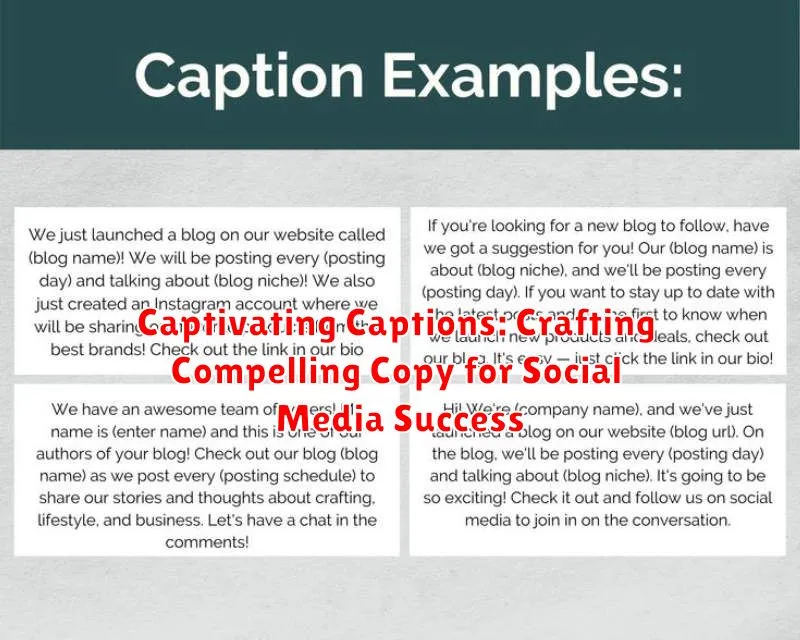
In today’s digital landscape, captivating captions are crucial for social media success. Whether you’re a business seeking to expand its reach, an influencer aiming to build a loyal following, or an individual wanting to share your experiences, crafting compelling copy is essential to grabbing attention and fostering engagement. This article delves into the art of writing captivating captions that resonate with your audience, ultimately contributing to your overall social media success.
From understanding your target demographic to employing effective storytelling techniques and incorporating relevant keywords, mastering the nuances of caption writing can significantly impact your online presence. Learn how to transform mundane descriptions into captivating captions that not only stop the scroll but also inspire likes, comments, shares, and ultimately, drive meaningful connections. Discover how to leverage the power of compelling copy to achieve demonstrable social media success and elevate your brand or personal profile in the competitive digital realm.
Understanding the Importance of Engaging Captions
In the bustling world of social media, a captivating image or video may grab attention, but it’s the caption that truly seals the deal. A compelling caption transforms a passive viewer into an active participant, fostering a sense of connection and community around your brand.
Engaging captions are crucial for several reasons. They provide context, explaining the story behind your visual content and giving it deeper meaning. They also offer a chance to showcase your brand’s personality, using a tone of voice that resonates with your target audience. Furthermore, well-crafted captions encourage interaction, prompting likes, comments, shares, and ultimately, a stronger online presence.
Captions drive meaningful engagement, which goes beyond mere vanity metrics. They facilitate genuine conversations, build relationships with followers, and ultimately contribute to a more vibrant and loyal online community.
Knowing Your Target Audience and Brand Voice
Before crafting any caption, understanding your target audience is crucial. Ask yourself: Who are you trying to reach? What are their interests, values, and pain points? Tailoring your message to resonate with your specific audience increases engagement and fosters a sense of community.
Equally important is defining your brand voice. This represents your brand’s personality and how you communicate with your audience. Is your brand playful and humorous, or informative and professional? Maintaining a consistent brand voice across all captions strengthens brand recognition and builds trust.
Consider creating a brand voice chart outlining key characteristics, such as tone, language, and style. This will serve as a valuable guide for crafting captions that accurately reflect your brand identity.
Crafting Captions that Spark Conversation
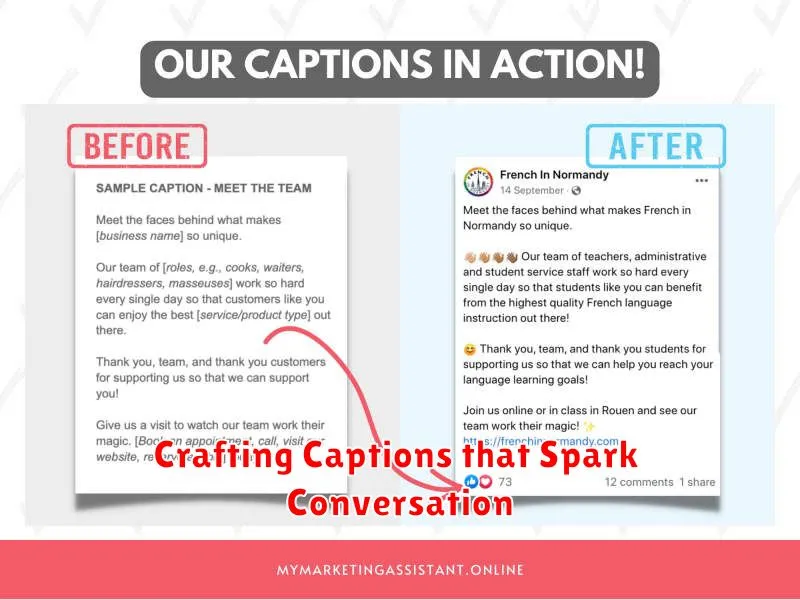
Turning passive scrollers into active engagers requires crafting captions that ignite discussions. Ask questions to directly involve your audience. This encourages responses and fosters a sense of community.
Run polls and quizzes to tap into your audience’s playful side and gather valuable insights. A simple “Which do you prefer?” with a couple of options can significantly boost engagement.
Use prompts to encourage interaction. Ask for opinions, experiences, or recommendations related to your post. For example, if showcasing a new product, ask “What problem would this solve for you?”
Incorporate fill-in-the-blank statements. These encourage quick and easy responses. For example, “My favorite thing about [product/service] is _______.”
Using Emojis and Hashtags Effectively
Emojis and hashtags are small but mighty tools that can significantly enhance your captions’ reach and engagement. Used strategically, they can add personality, context, and searchability to your posts.
Emojis: Adding Personality and Clarity
Emojis can inject personality and emotion into your captions, making them more relatable and engaging. They can also help clarify your message and tone, especially when dealing with potentially ambiguous text. However, avoid overusing emojis, as this can appear unprofessional or cluttered. Select emojis that align with your brand and message, and use them sparingly for maximum impact.
Hashtags: Expanding Reach and Discoverability
Hashtags categorize your content and make it discoverable to a wider audience interested in specific topics. Relevant hashtags connect your posts with users searching for information or discussions related to your industry or niche. Research popular and trending hashtags within your field, but also consider using niche hashtags to reach a more targeted audience. Avoid using an excessive number of hashtags, as this can appear spammy. Focus on quality over quantity.
Writing Captions for Different Social Media Platforms
Each social media platform has its own unique culture and character, requiring a tailored approach to caption writing. What works on Instagram might not resonate on LinkedIn, and vice versa. Understanding these nuances is crucial for maximizing engagement.
Twitter: Short, Sweet, and Shareable
Brevity is key on Twitter. Captions should be concise and impactful, leaving room for retweets and comments. Focus on delivering key information quickly and incorporating relevant hashtags.
Instagram: Visually Driven Storytelling
Instagram is a visually-centric platform. Captions should complement the image or video, adding context, emotion, or a call to action. Micro-storytelling and engaging questions work well here.
Facebook: Community Building and Connection
Facebook captions can be longer and more conversational. Focus on building community by asking questions, sharing personal anecdotes, and encouraging interaction. Use a friendly and approachable tone.
LinkedIn: Professional and Industry-Focused
LinkedIn requires a more formal tone. Captions should be professional, insightful, and relevant to your industry. Share industry news, offer expert advice, or highlight career achievements.
A/B Testing Your Captions for Optimal Performance
A/B testing is a crucial step in optimizing your social media captions for maximum impact. This method involves creating two slightly different versions (A and B) of your caption and showing them to separate segments of your audience. By analyzing the performance of each version, you can determine which resonates better and drives stronger engagement.
Key elements to test include the caption length, tone (e.g., humorous vs. serious), use of emojis, and call-to-action phrasing. You can also experiment with different content formats, such as questions versus statements.
Tracking metrics is essential for successful A/B testing. Focus on metrics relevant to your goals, such as reach, engagement (likes, comments, shares), and click-through rates. Social media platforms often provide built-in analytics tools to facilitate this process.
By systematically testing different variations of your captions, you can gather data-driven insights into what works best for your target audience and refine your strategy for optimal performance.
Incorporating Storytelling into Your Captions
Captions offer a prime opportunity to connect with your audience on a deeper level through storytelling. Weaving narratives, however brief, can transform a simple image or video into a memorable experience.
Engage emotions by sharing relatable anecdotes, personal experiences, or customer testimonials. These stories humanize your brand and foster trust. Think about the core message you want to convey and how a narrative can effectively illustrate that point.
Structure your story. Even within a short caption, consider a beginning, middle, and end. Introduce a character or situation, present a challenge or conflict, and then offer a resolution or takeaway. This creates a cohesive narrative arc that captivates readers.
Use evocative language. Employ vivid descriptions, sensory details, and emotional words to draw your audience into the story. Strong verbs and descriptive adjectives can paint a picture and make the story more impactful.
Using Call-to-Actions in Your Captions to Drive Engagement
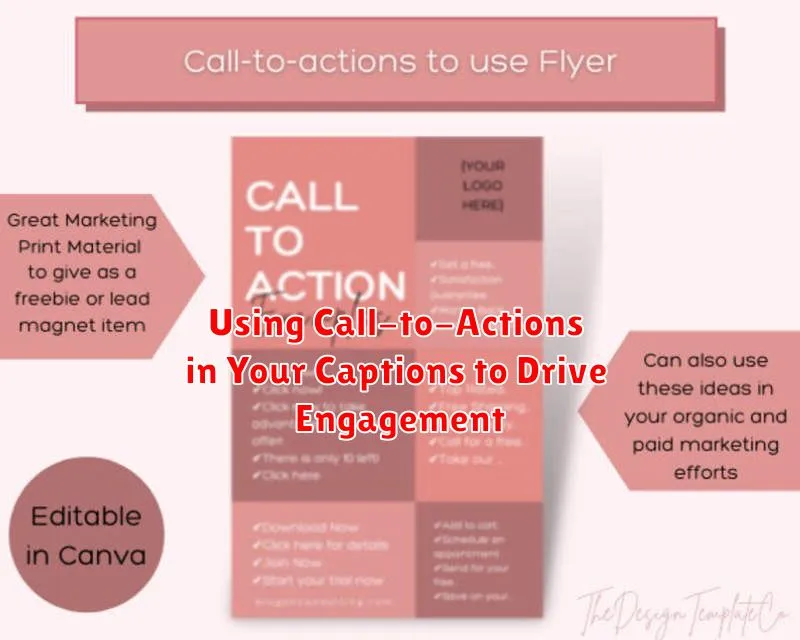
A compelling caption can grab attention, but a well-placed call-to-action (CTA) converts that attention into engagement. CTAs guide your audience towards a desired action, turning passive viewers into active participants.
Effective CTAs are clear and concise. Avoid ambiguity. Tell your audience exactly what you want them to do. Do you want them to visit your website? Leave a comment? Tag a friend? The clearer the instruction, the more likely your audience is to follow through.
Different CTAs serve different purposes. “Shop Now” encourages immediate purchases, while “Learn More” directs users to further information. “Tag a friend who needs this” boosts organic reach through sharing. Tailor your CTA to the specific goal of your post.
Experiment with various CTA phrasing. A/B test different options to see what resonates best with your audience. Track the results to optimize future campaigns and maximize your engagement rates.
