
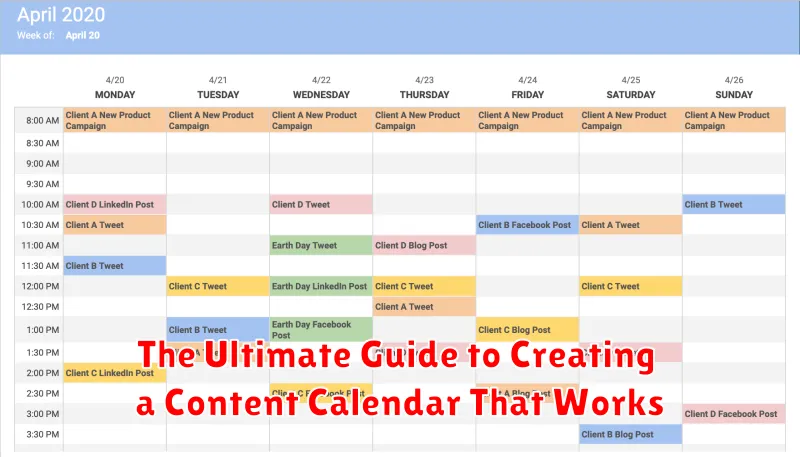
Creating a content calendar is paramount to a successful content marketing strategy. A well-structured calendar provides a roadmap for your content creation, ensuring consistency, organization, and ultimately, better results. This ultimate guide will equip you with the knowledge and tools necessary to develop a content calendar that truly works, driving engagement, boosting SEO, and achieving your content marketing goals. Whether you’re a seasoned marketer or just starting out, mastering the art of the content calendar is a critical step in maximizing your content’s impact.
This guide will cover everything from understanding the fundamental benefits of a content calendar to the practical steps of building one. We’ll explore various content calendar templates and tools, discuss content planning strategies, and provide actionable tips for content scheduling and promotion. Learn how to align your content with your overall marketing objectives, target your desired audience effectively, and measure the success of your content calendar. Prepare to transform your content marketing efforts with the ultimate guide to creating a content calendar that works for you.
What is a Content Calendar and Why You Need One?
A content calendar is a structured plan that outlines all your upcoming content pieces. It acts as a centralized hub, detailing what you’ll publish, where you’ll publish it, and when. Think of it as a roadmap for your content marketing strategy.
But why is a content calendar so crucial? Without one, creating consistent, high-quality content becomes incredibly challenging. A content calendar offers numerous advantages, enabling you to stay organized, maintain a regular publishing schedule, and plan your content strategically to align with your overall marketing goals.
By having a clear overview of your planned content, you can avoid last-minute scrambles, ensure a diverse range of topics, and effectively target specific audiences. Ultimately, a well-maintained content calendar is essential for maximizing your content marketing efforts and achieving measurable results.
Benefits of Using a Content Calendar
A content calendar offers numerous advantages for individuals and businesses seeking to enhance their content marketing efforts. It provides a centralized hub for organizing and managing all content activities, leading to increased efficiency and productivity.
With a content calendar, you can plan ahead and ensure a consistent flow of high-quality content. This consistency helps build brand awareness and keeps your audience engaged over time. It also allows you to identify potential content gaps and capitalize on trending topics.
Streamlined collaboration is another key benefit. A content calendar facilitates communication and coordination among team members, ensuring everyone is on the same page. This is particularly valuable for larger teams or organizations with multiple content contributors.
Finally, a content calendar enables effective performance tracking. By scheduling and monitoring content releases, you can easily analyze what resonates with your audience and adjust your strategy accordingly. This data-driven approach helps optimize content performance and maximize your return on investment.
Types of Content Calendars
Content calendars can take various forms depending on your needs and preferences. Choosing the right type is crucial for maximizing its effectiveness. Here are a few common types:
Spreadsheet Content Calendar
This is the most basic type, often created using programs like Google Sheets or Microsoft Excel. It’s simple to set up and offers a good overview of planned content. Flexibility is a key advantage, allowing for easy customization.
Social Media Management Platform Calendar
Many social media management platforms like Hootsuite and Buffer offer built-in content calendar functionality. These are ideal for scheduling and managing social media posts directly within the platform, streamlining your social media workflow.
Marketing Calendar Software
Specialized marketing calendar software provides more robust features, often including collaboration tools, content approval workflows, and analytics. This option is best for teams managing complex content strategies across multiple channels.
Custom-Built Calendars
For very specific needs, some organizations opt for custom-built calendar solutions. While offering the highest level of tailoring, this approach also requires significant investment and technical expertise.
Steps to Create a Content Calendar
Creating a content calendar involves a series of steps that ensure organization and effectiveness. Follow these steps to develop a calendar that works for you:
1. Define Your Content Goals and Objectives
Start by clearly identifying your overall content marketing goals. What do you hope to achieve with your content? Is it brand awareness, lead generation, or something else? Clearly defined goals will guide your content creation.
2. Identify Your Target Audience
Understanding your target audience is crucial. Who are you trying to reach? What are their interests, needs, and pain points? This information will inform the type of content you create.
3. Choose Your Content Channels
Determine where you will distribute your content. Will you focus on social media, blog posts, email newsletters, or a combination? Channel selection depends on where your target audience spends their time.
4. Brainstorm Content Ideas
Generate a list of potential content topics relevant to your target audience and aligned with your goals. Consider various content formats, such as blog posts, infographics, videos, and podcasts.
5. Schedule Your Content
Using your chosen tool (discussed later), plot your content ideas onto the calendar. Establish a posting frequency that is sustainable and effective for your chosen channels.
Choosing the Right Tools for Your Content Calendar
Selecting the right tools is crucial for maximizing your content calendar’s effectiveness. The ideal tool depends on your specific needs and budget. Consider factors like team size, content complexity, and integration with other platforms.
Spreadsheets offer a simple, cost-effective solution for basic content calendars. They are easily accessible and customizable, ideal for individuals or small teams with straightforward content strategies. However, they can become cumbersome for managing complex campaigns or large teams.
Specialized content calendar software provides advanced features like collaboration tools, workflow automation, and analytics dashboards. These tools are designed specifically for content management, offering a more streamlined and efficient experience. Some popular options include CoSchedule, Trello, and Asana. While these tools offer greater functionality, they often come with a subscription fee.
Consider these factors when choosing a tool:
- Ease of Use: Is the interface intuitive and easy to navigate?
- Collaboration Features: Does it allow for seamless team collaboration and communication?
- Integration with Other Platforms: Can it integrate with your social media accounts, analytics platforms, and other marketing tools?
- Cost: Does the pricing align with your budget?
Tips for Managing Your Content Calendar Effectively
A well-managed content calendar is crucial for consistent output. Regularly review and update your calendar, ideally weekly, to adjust for changes in strategy or unforeseen circumstances.
Assign ownership for each piece of content. This ensures accountability and streamlines the workflow.
Establish a clear approval process to maintain quality control and brand consistency. Determine who needs to review and approve content before publishing.
Utilize a collaborative platform. Shared calendars and project management tools facilitate communication and transparency among team members.
Track key metrics. Monitor content performance to understand what resonates with your audience and adjust your strategy accordingly. Focus on metrics relevant to your goals, such as website traffic, engagement, and lead generation.
Integrating Your Content Calendar with Other Marketing Efforts
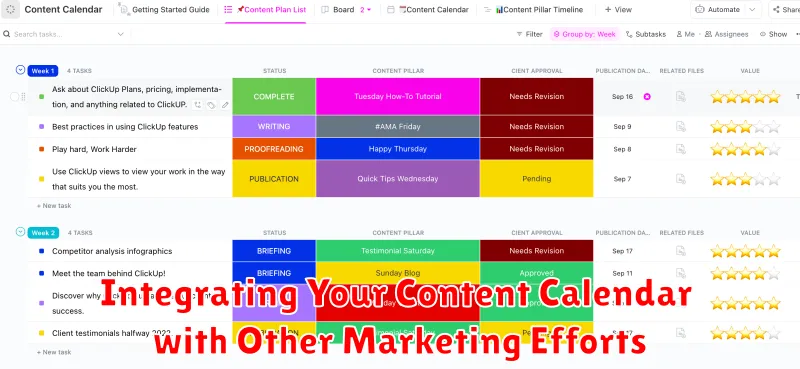
A content calendar shouldn’t exist in a vacuum. Its greatest strength comes from its integration with other marketing activities. This cohesive approach ensures consistent messaging and maximized impact across all platforms.
Social Media Marketing: Schedule social media posts to amplify the reach of your content calendar items. Pre-plan posts that tease upcoming blog articles, videos, or infographics. This creates buzz and anticipation.
Email Marketing: Utilize your content calendar to inform your email newsletters. Share recently published content and upcoming releases with your subscribers. This keeps your audience engaged and drives traffic back to your website.
Paid Advertising: Leverage your content calendar themes and topics for paid advertising campaigns. Create ads that align with your planned content, ensuring a consistent message and capturing interested audiences.
Event Marketing: If your business participates in events, align your content calendar to support pre-event promotion and post-event follow-up. This creates a cohesive experience for attendees and extends the impact of your events.
Examples of Successful Content Calendars

While specific content calendar structures vary depending on individual needs, some general examples illustrate effective implementation. A social media focused calendar might utilize a spreadsheet or dedicated platform to schedule posts across various channels, outlining the date, time, platform, content type (image, video, text), and relevant hashtags. This allows for consistent posting and targeted messaging.
A blog-centric content calendar might organize upcoming articles by topic, keyword, target audience, author, and publishing date. This ensures a diverse range of content and supports a consistent publishing schedule.
For email marketing, a successful calendar might track campaign names, target segments, email subject lines, send dates, and key performance indicators (KPIs). This helps maintain a consistent communication flow with subscribers and facilitates performance analysis.
Common Mistakes to Avoid When Creating a Content Calendar
Creating a content calendar can be a game-changer for your marketing strategy, but it’s easy to fall into common traps. Avoiding these pitfalls will ensure your calendar’s effectiveness.
One frequent mistake is being too rigid. While structure is important, allow for flexibility to accommodate trending topics or unexpected events. Locking yourself into a rigid schedule can limit your ability to be reactive and relevant.
Another common error is lack of defined goals. Before populating your calendar, establish clear objectives. Ask yourself what you want to achieve with your content. Increased brand awareness? Lead generation? Defining your goals will guide your content creation process.
Ignoring your audience is a critical oversight. Your content should resonate with your target demographic. Research their interests and tailor your calendar accordingly. Creating content without considering your audience is like throwing darts in the dark.
Finally, failing to analyze results is a missed opportunity. Regularly review your content performance to understand what’s working and what’s not. This data-driven approach will help you refine your strategy and maximize your content’s impact.
